Treating cataracts
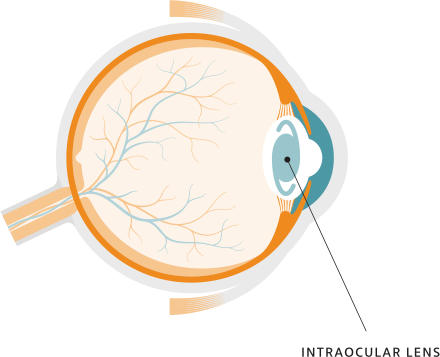
Intraocular Lens
Once the cloudy natural lens, or cataract, is removed from the eye, vision and focus is returned as a result of the implantation of an intraocular lens (IOL)—a critical part of the cataract operation.
The IOL is made from a soft, flexible material. It sits within the eye and does not have to be replaced or removed like a contact lens. The lens is totally internal and cannot move or fall out. It cannot be felt after the operation.
Lens Types
As there are a number of different IOLs available, your surgeon will discuss with you which type will best suit your needs. The most commonly used IOLs are ‘monofocal’ which will correct your vision for one distance. Glasses will still be required for other distances.
Some patients with cataracts also have astigmatism which is a distortion of the shape of the cornea. The cornea is usually round like a soccer ball, but patients with astigmatism have a cornea which is more oval, like an Australian rules football. Special lenses, known as Toric IOLs, can be used to correct the astigmatism, allowing for even better post-operative vision.
Other lenses such as multifocal or Extended Depth of Focus IOLs may allow for distance, intermediate +/− near vision. These may be suitable for some patients. Your surgeon will discuss this with you at your consultation.
Refractive Lens Exchange
It is possible to have refractive surgery to reduce your dependence on glasses. This procedure, called a refractive lens exchange, is useful for patients who wear distance glasses either for long or short sightedness. Similar to cataract surgery, it involves removing the natural lens from the eye and replacing it with an IOL.
Refractive lens exchange is not covered by your health fund or by Medicare, so costs need to be discussed prior to going ahead with this procedure.
The benefits and risks of this operation will be discussed with your surgeon if you are suitable.